

South Yorkshire recently welcomed a visit from Minal Bakhai, Clinical Lead for the National Neighbourhood Health Implementation Programme at NHS England, who came to learn more about the innovative work being delivered across Doncaster and Rotherham’s neighbourhood pilot sites.
What is a ‘neighbourhood?’
A ‘neighbourhood health service’ aims to help people to live well in their local areas and reduce their need for care delivered in hospitals. It does this through integration, bringing together services across the NHS, social care, and community organisations to work as a co-ordinated whole rather than in isolation. By aligning services and sharing information, integration aims to help ensure joined-up care for patients and improve health outcomes.
The neighbourhood health model also focus on prevention, maintaining health and preventing illness from developing or worsening through clinical services such as vaccinations, screening, management of risk factors, and early interventions. In addition, by working closely with local authorities and others, neighbourhood health services can also address the wider determinants of health, such as housing, education, employment and social support, which significantly influence people’s wellbeing and risk of illness.
The neighbourhood health model also focuses on brining care closer to people’s homes and personalising care, tailoring health and care services to an individual’s needs, preferences and circumstances, giving people more choice and control over their care.
The visit
Minal started in Doncaster and met with the Doncaster place team at Conisbrough Group Practice.
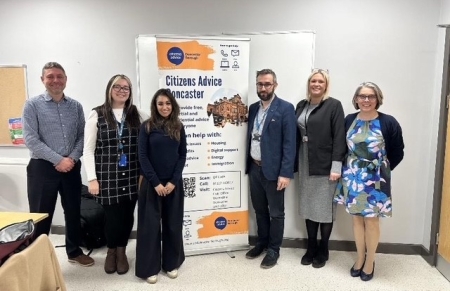
She then met people from the Citizen's Advice to discover how CAB’s advice on prescription work is having a positive impact for people locally.
Shortly after, Minal visited at Sew Mindful Crafts in Edlington to learn more about how they are combating loneliness, helping to build confidence and helping people to learn and develop new life-skills.
Minal then met with members of the Rotherham Place Board to hear more about their shared vision for neighbourhood health and the priority areas including:
- Prevention — including targeted over-40s health checks to identify risks earlier and support people to stay well for longer
- Reducing risk in 18–39 year olds — proactively supporting younger adults to address emerging health risks and inequalities
- Complex frailty — delivering coordinated, proactive care for people with complex and long-term needs
Anthony Fitzgerald, Executive Place Director for Doncaster and Rotherham at NHS South Yorkshire ICB said: “We were delighted to welcome Minal Bakhai and showcase the exciting work taking place in Rotherham and Doncaster as we continue to develop our neighbourhood way of working. Our priority areas reflect Rotherham and Doncaster’s strong commitment to prevention, early intervention and tailored support at every stage of life, helping to ensure neighbourhood-based health services genuinely meet the needs of our local communities.”
The visit then moved to Broom Lane Medical Centre in Rotherham, where Minal observed a proactive care multidisciplinary team (MDT) meeting in action. These MDTs bring together professionals from social care, community nursing, GP practices, care coordination, geriatrics and social prescribing. By working collaboratively, the team develops joined-up care plans for people with complex frailty needs, helping them stay well and supported in their communities.
Links to VCSE
A key focus of visit was to explore models that strengthen links with the Voluntary, Community and Social Enterprise (VCSE) sector. To highlight this, Minal visited You Asked We Responded (YAWR) Services, a valued social prescribing partner based at Clifton Park, Rotherham. Founded in 2012 to support the health and wellbeing of Rotherham’s Pakistani community, YAWR has grown into a vital partner in local social prescribing. The organisation provides culturally appropriate support and works to reach marginalised communities to stay connected and resilient. Its services now include befriending, enabling, benefits advice, advocacy, green social prescribing and employability support.
Anthony Fitzgerald continued, “Feedback from the visit was extremely positive. The strength of partnership working across Rotherham and Doncaster, the local approach and the long-term vision for neighbourhood health were all highlighted. The visit provided a valuable opportunity to share insights and experiences with the national team, helping to build understanding of what works well and how best practice can be spread across the region.”