Contents
In this month's newsletter:
- Industrial action by resident doctors
- Thank you to practice teams for implementing contract changes
- Reminder: share and update your walk-in information for December
- Update from Sheffield Teaching Hospitals NHS Foundation Trust relating to the Electronic Patient Record system
- New scam impersonates NHS calls
- Cloud-Based Telephony publication release
- Phase 2 of childhood immunisation schedule changes
- Transforming cancer care through research and AI-driven technology
- Primary care nurses asked to share their career stories
- Join RDaSH for lunch on 26 November!
- Webinar: EAT LANCET 2.0 – The role of healthcare professionals
- Webinar: Know Your System – Diabetes Care Process and Treatment Targets
- HSSIB STEMI report
- UKHSA: Clade Ib mpox
- UKHSA: Influenza A(H3N2) early season activity in England
- Catheter Equipment and Continence Assessment Referral Form
News
Industrial action by resident doctors
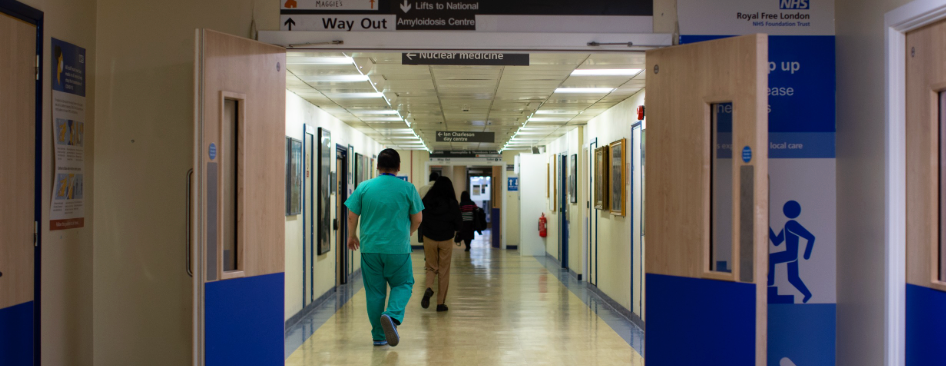
Resident doctors took industrial action over five days, which lasted from Friday until Wednesday morning. On behalf of the ICB, we would like to extend our thanks to primary care teams during this period for supporting patients and working with our system partners to keep services running.
Thank you to practice teams for implementing contract changes

Thank you to practice teams for your efforts in implementing the recent contract changes. Many practices have been providing online access throughout core hours for some time, with the majority of practices delivering this service successfully. Other practices have taken huge strides to achieve this in the last six months.
We’re starting to see a positive impact, with seven in ten adults saying it was easy to get through to their practice, up from six in ten in 2024, as outlined in ONS’ Health Insight Survey. Many GPs are saying that online access has improved their work life by making it easier to manage demand and triage patients based on clinical need.
There is support available to those that may be finding it difficult to make this change. Practices should read the Frequently Asked Questions or watch these webinars, where practices explain how they’ve made the transition.
Reminder: share and update your walk-in information for December

A reminder to all sites offering walk-ins for COVID and/or flu vaccines to please update your profile manager information, including walk-in clinic times. Many people prefer to access vaccination without an appointment, so keeping this information current is essential for good access and improved uptake. Updates can be made as normal via profile manager. For help, email nhswebsite.servicedesk@nhs.net.
Update from Sheffield Teaching Hospitals NHS Foundation Trust relating to the Electronic Patient Record system

STH has issued a letter to primary care colleagues about their new electronic patient record system. Please take a few moments to read the letter below. The GP Service to Service form attachment is here.
Dear Primary care colleagues,
Thank you for all the feedback you have been providing to us through the ICB and STH contact points, since we implemented our new electronic patient record system (EPR). We knew from listening to other Trusts who had new EPRs that there would be some initial teething issues, and we do appreciate your forbearance whilst we address these as quickly as possible. We have made good progress to date and the update below we hope will be helpful. Please be assured that we do not underestimate the importance of getting this right as quickly as possible to limit the impact on patient care and your teams. You should see further improvements over the coming weeks as work continues.
Discharge letters and other clinical correspondence.
Thank you for the detailed feedback we have received relating to the timeliness and completeness of discharge letters. This has informed a full review of the discharge process we are asking staff to follow and enabled us to identify where we need to do more work to help staff adopt the new process more easily. The issues which have been raised and are that we are addressing include:
- Missing discharge date on some letters
- Wrong specialty listed in different parts of some letters
- Some medication changes not being fully described or issued in a timely way.
- Time it is taking for some correspondence to reach GPs.
- Duplicate letters.
- Longer format of discharge letters.
In terms of the timeliness of correspondence, the issue is that if all the fields on the EPR for the discharge process or other clinical correspondence are not completed by all the relevant staff involved in the patient’s care then this can result in the letter being held in draft in the system which has contributed to delays in the letters getting to you. We have put in a process and team to monitor and review any letters which are held in the system for different reasons, any missing information is being added and then the letters are being sent out. The consequence of this is that some practices may be receiving batches of letters which we know is not ideal, but we would ask you to bear with us while work is underway to address the issues permanently.
The new EPR also requires staff to press a “save and submit” button rather than just “save.” If the save and submit button is not used, then the letter is held in draft as the system assumes there is something else to be added and not complete. We have made this clear to colleagues and will continue to reiterate the importance of pressing the Save and Submit button.
A User adoption group has been established to prioritise how we can further support staff to adopt the correct discharge and clinical correspondence processes. This includes visits to wards and departments to give face to face support and training, clearer instructions on the tasks each staff group need to complete in the discharge process and a review of the process to see if it can be simplified within Connect.
Regarding the instances of duplicate letters, our admin team have created duplicates because the NHS Spine update was not end dating addresses correctly. We have changed the process to stop this from happening. We have noted that in some cases the clinician has sent the letter, and the secretary is also sending the letter. We will address this in the forthcoming staff masterclass and through other user adoption activities. In terms of the longer format of discharge letters, this relates to font type and layout in most cases but following some changes we have had some positive feedback on ED letters recently that this is now improving. We will continue to work on this moving forward.
Outpatient clinics
Over 85% of our outpatient clinics are now booking as normal following remedial work required following the transition to the EPR. The remaining clinics are being worked on over the next few weeks and we have ensured our teams have the timelines to be able to update patients on when they can expect to receive appointments (in line with pre EPR waiting times for different specialties). We are also addressing the issues raised where patients have reported that they have not had appointment letters. The admin team are checking where possible and contacting patients by telephone.
Clinical concerns reporting process
We are very grateful to the ICB for overseeing the tracker which has collated primary care feedback each week. It has been incredibly helpful, thank you, but we have now reached a point where the same issues are being reported each week and to avoid unnecessary work for primary care this is no longer necessary. We hope that the information above is reassuring in terms of the progress being made to rectify the issues raised.
In terms of queries which relate to specific patients and potential safety implications we are asking primary care colleagues to continue completing the attached form and email it to sth.patientsafetyteam@nhs.net . This will provide the specific details for us to properly review and respond to these clinical concerns as well as make any necessary changes to our processes. The outcome of these queries will be fed back to the person raising the concern and communicated more widely if appropriate.
We hope this update has been helpful and thank you again for your patience and support whilst we embed the new system.
Dr Nick Lyons
Chief Medical Officer (Development)
Jane McNicholas
Chief Medical Officer (Operations)
New scam impersonates NHS calls

A scam in which fraudsters impersonate the NHS via automated phone calls has been reported.
The calls, which appear to come from a UK mobile number, claim that patients must update their GP records over the phone or risk being removed from the practice list.
They may ask for personal information, such as address, NHS number, or bank details.
The public is being warned that these calls are not genuine and told that the NHS will never contact patients by phone to demand updates to their records, threaten removal from a GP list, or request personal or financial information.
Patients have been advised to end the call and ring the practice directly if they are unsure whether a call is genuine.
And they have been asked to report suspected fraud to the NHS Counter Fraud Authority at https://cfa.nhs.uk/report-fraud.
Cloud-Based Telephony publication release

Cloud-based telephony (CBT) data will be made publicly available at GP practice level for the first time via the NHS England website on 27 November 2025.
Publication of CBT data will enable analysis to measure patient-initiated demand and the ease of patients being able to contact their GP practice.
Key metrics include call volumes, call outcome (answered, missed, resulting in a call back request, or ending in response to an automated message or diversion) and call wait times and duration. Data will be available by day of the week and time of day and updated monthly.
Phase 2 of childhood immunisation schedule changes

The UK Health Security Agency (UKHSA) and NHS England have published a letter in support of Phase 2 of changes to the National Child Immunisation Schedule. The letter covers the introduction of a routine varicella (MMRV) vaccination programme for children at one year and at 18 months, with a selective catch-up for children aged 3 years and 4 months to less than 6 years in England.
Transforming cancer care through research and AI-driven technology

A showcase event - 29 January 2026 in Sheffield
The potential of Artificial Intelligence to revolutionise cancer pathways across the South Yorkshire region by speeding up diagnoses and treatment is one of the areas being explored at a research and innovation event early next year.
Academic researchers, digital experts, and healthcare professionals working in cancer services are invited to join the half-day focus on how AI-driven technology can help transform clinical delivery, administration processes and patient outcomes, ultimately saving more lives.
Jointly presented by the South Yorkshire Innovation Hub and the SYB Cancer Alliance, the event brings in key practitioners to share knowledge and best practice in cancer research and advances in technology, exploring what the challenges are and what the solutions might be by working together.
The event, kindly sponsored by Open Medical, takes place on Thursday 29 January 2026 at the University of Sheffield’s Wave Building in Broomhill from 12.30pm to 4.30pm.
The event is capped at 80, so please register for your free place now using this link: https://www.eventbrite.co.uk/e/south-yorkshire-icb-research-innovation-forum-cancer-tickets-1863460483469?aff=oddtdtcreator
A full agenda and further details will be sent to delegates in due course.
Primary care nurses asked to share their career stories

NHS England is asking primary care nurses to share their career journeys and help inspire the next generation.
Whether a newly registered, in early career, or an experienced professional in primary care, every story matters. NHS England wants to showcase the diverse paths into primary care nursing, and the rewarding career it offers.
Case studies could feature in resources for future nurses, students and newly registered nurses on Health Careers or the Student Hub. There may also be opportunities to speak at online events, be featured on NHS England social media accounts and on the Health Careers website. Contact: wte.comms@nhs.net
Join RDaSH for lunch on 26 November! Lunch Collab
Here is your invitation to join our Learning Disability and Forensic Teams for lunch on Wednesday, 26 November, between 1 and 2 pm via Microsoft Teams. Book your place by clicking on this link Lunch Collab - Learning Disability and Forensic Service. Invites to future sessions can also be found below.
Takeaways from the sessions will include:
- Who the Teams are and how to contact them
- Referral criteria/ Who and how!
- What they don't offer and why
- Signposting for additional help and advice
- Current wait times
- Support available for those on our waiting lists and for you
- Resources referred to in the session for you to share with your colleagues and Teams
You will also have the opportunity to ask those questions that can help us all to work more collaboratively through a shared understanding of roles and services provided across primary and secondary care.
The lunchtime sessions are designed for GP colleagues but please feel free to extend the invitation to anyone else in your Teams who might benefit from coming together with RDaSH services , for example Care Navigators, clinical staff, PCN staff, Social Prescribers, etc.
Please share across your GP, Clinical and Admin Teams as you feel appropriate.
Our last session was rated 5 out of 5 and ALL of those who fed back to us felt that it was a good use of their time. Why not come and see what Lunch Collab is all about?
You can book a place on any of our future Lunch Collab sessions at the links below:
|
Date |
Time |
Focus |
Ticketline |
|
Tuesday, 16 December |
12 noon to 1 pm |
Epilepsy Service – Doncaster only |
RDaSH Lunch Collab - Epilepsy Service (DONCASTER ONLY) - 16/12/25 |
|
Wednesday, 28 January 2026 |
12 noon to 1 pm |
Wheelchair Service – Doncaster only |
RDaSH Lunch Collab - Wheelchair Service (DONCASTER ONLY) - 28/1/26 |
|
Thursday, 19 February |
12 noon to 1 pm |
CAMHS – Getting Advice – All localities |
|
|
Tuesday, 17 March |
12 noon to 1 pm |
Zone 5-19 – School Nursing, Sexual Health and Substance Misuse – Doncaster only |
We hope to see some of you there!
Webinar: EAT LANCET 2.0 - The role of healthcare professionals

10th December 1:00 - 2:00 pm. Guest speaker Dr Shireen Kassam, consultant haematologist and founder of Plant-Based Health Professionals UK will help us understand the impact of the food system on planetary health and the recommendations of the 2025 Eat Lancet 2.0 report. Register here
Webinar: Know Your System - Diabetes Care Process and Treatment Targets

Thursday 25th November 12:00-13:00.
Healthcare professionals are invited to join a virtual learning event aimed at addressing key areas of health policy across the full Diabetes Prevention and Care pathway.
This is a collaborative event bringing together health care professionals with an interest in diabetes and will be led by Dr Garry Tan (Clinical Lead for the National Diabetes Audit). The session will include a demonstration of the new Actionable Insights dashboard for Care Processes and Treatment Targets, and a case study from Dr Waqas Tahir.
What is it about?
The event will showcase data and tools to support improvements for care processes and treatment targets. Attendees will hear from a range of speakers, providing peer-led practical demonstrations and best-practice applications.
During the event you will be shown how to access your data; how to analyse your data; and how use your data to facilitate improvement.
Who should attend?
Healthcare professionals interested in diabetes, who wish to update their knowledge and skills and seek improvement in patient outcomes for people living with diabetes.
Clinicians, commissioners and managers who would like to understand the quality of their local diabetes care to help them plan and improve their local services.
YOU WILL RECEIVE A CERTIFICATE OF ATTENDANCE FOR JOINING THIS WEBINAR
Follow the link to register today: Know Your System Registration.
Updates
 HSSIB STEMI report
HSSIB has published a report titled 12-lead electrocardiograms (ECGs) in ambulance services: diagnosis of suspected ST elevation myocardial infarction (STEMI). The report highlights challenges faced by ambulance crews in interpreting ECGs when a patient has a suspected type of heart attack known as an ST Elevation Myocardial Infarction (STEMI).
UKHSA: Clade Ib mpox
 Please find attached the UKHSA Health Protection Briefing Note 2025/041: Clade Ib mpox – Community transmission in European countries and the USA, including detections in gay, bisexual and other men who have sex with men (GBMSM).
UKHSA: Influenza A(H3N2) early season activity in England
Please find the attached UKHSA Health Protection Briefing Note 2025/042: Influenza A(H3N2) early season activity in England: implications for clinical practice and laboratory referral.
Catheter Equipment and Continence Assessment Referral Form
The Catheter Equipment and Continence Assessment Referral Forms have now been updated in SystmOne only, and an electronic referral button to the Rotherham Care Co-Ordinators has also been added next to the forms for ease of referring. The forms can be accessed, as before, under the orange arrow (Communications Template).